

We’re living in a kind of digital dystopia.
I call it The Machine.
We go to our phones first thing in the morning. Check it 96 times during the day. Go to bed scrolling.
Meal time, couch time, work time, poop time—It’s ALL SCREEN TIME!
“Your life is what you pay attention to.” —Catherine Price
Our attention goes to screens. 7 hours per day on average. 9 for Gen Z.
Our lives are literally being consumed by screens.
But this isn’t a post to rant about it (I’ve already done that at length). If you’re not sure if your screen time is a problem, you can read that post here.
Instead, this is a post exploring part of the solution—a Digital Sabbath.
I grew up in a fundamentalist Christian community that viewed Sunday’s as sacred.
On our weekly day of rest, there was no chasing after money or hustling towards material goals. Sunday was a full day dedicated to family and faith.
First, our family gathered for morning prayer and a delicious breakfast. Then Dad would lead us through a Sunday school where we learned what was sacred to our family. Followed by 2 more hours of religious teaching at the community church with about a thousand other believers.
But my favorite part of the day was what came next: our family feast. The best meal of the week was always Sunday evening after church. I mean we’re talking gourmet home cooking made with love and delicious AF.
For the first 20 years of my life, I took that weekly ritual for granted.
Then, for reasons I won’t go into here, my faith failed. I left fundamentalism behind, and the weekly Sabbath ritual with it.
But then, Sundays became a blur of beers and screens. 8 hours of binging the NFL from my couch, with Instagram during commercials.
No sacred teachings, no gathering of community, no family feast.
I was filling my Sabbath with depressing doses of alcohol and screen time.
It took me several years of navigating that void before I realized:
I desperately needed to take the Sabbath back.
So I designed a weekly ritual to ditch the screens, escape The Machine, and keep one day serene.
24 hours per week to reset and live my best life. All while leaving ideology and dogma at the door.
And you can do the same.
Screens are sucking our souls out through our eyeballs.
We’re being feasted on by a horde of billionaire Dementors.
Trading real talk for TikTok.
Getting pick-pocketed by Prime.
Being face-sucked by the Zuck.

Our Ritual Roots
Atomic Habits is a book that went absolutely viral with over 30 million copies.
It shows how habits form the foundation of our behavior. These atomic habits or “little rituals” are the structures through which our lives flow, for better or for worse.
You lift weights every Tuesday and Thursday at 6 P.M. So you get strong.
Or you doom scroll Instagram every time you take a poop. So you get hemorrhoids. 💩📱
Self-authorship of daily behavior is key to living a good life. Which is probably why Atomic Habits sold a bagillion copies.
Rituals are the structures through which our lives flow.
However, ritual goes much deeper than just repeated behavior over time.
Ritual is humanity’s oldest spiritual technology.
Archaeology shows symbolic ritual practices like red ochre use extending back 300,000-500,000 years. Neanderthals were burying their dead at least 130,000 years ago. The Upper Paleolithic period (45,000-50,000 years ago) brought an explosion of symbolic ritualistic behavior. Cave art and elaborate burials indicate a fully developed spiritual consciousness.
These primitive rituals are the origins of religion, and part of our species’ DNA.
At the very heart of the universal quest for meaning, transcendence, and connection, is ritual. Through ritual we connect to what Mircea Eliade termed “the sacred,” and what Carl Jung called “the numinous.”
For Eliade, humans will always divide reality into what is sacred and what is profane. The sacred is a reality wholly different from the ordinary (profane) world. It serves as the source of meaning and order for human beings, manifesting through objects, places, or events, connecting the divine and eternal with human experience.
Ritual is the mechanism through which humans access the sacred.
Ritual creates liminal space—the space “betwixt and between” ordinary reality. It’s the rhythm of transformation.
The daily meditation or prayer practice.
The weekly day of rest to reset.
The annual festival to zoom out and connect to cosmic cycles.
Neuropsychological evidence shows that ritual practice fundamentally alters consciousness. Through repetition, the brain learns to associate ritual experiences with spiritual states.
40,000+ years of shamanic practices across the planet demonstrates that ritual is not just for show. It represents a core feature of human consciousness itself. It’s our primary method for accessing deeper dimensions of existence and meaning.
So, to put it simply: ritual is part of the human OS.
But, it’s been hacked.
We’ve gotten trapped in the profane world of consumerism and screens.
We’ve lost the sacred.
“The decisive question for man is: Is he related to something infinite or not? That is the telling question of his life”. — Carl Jung
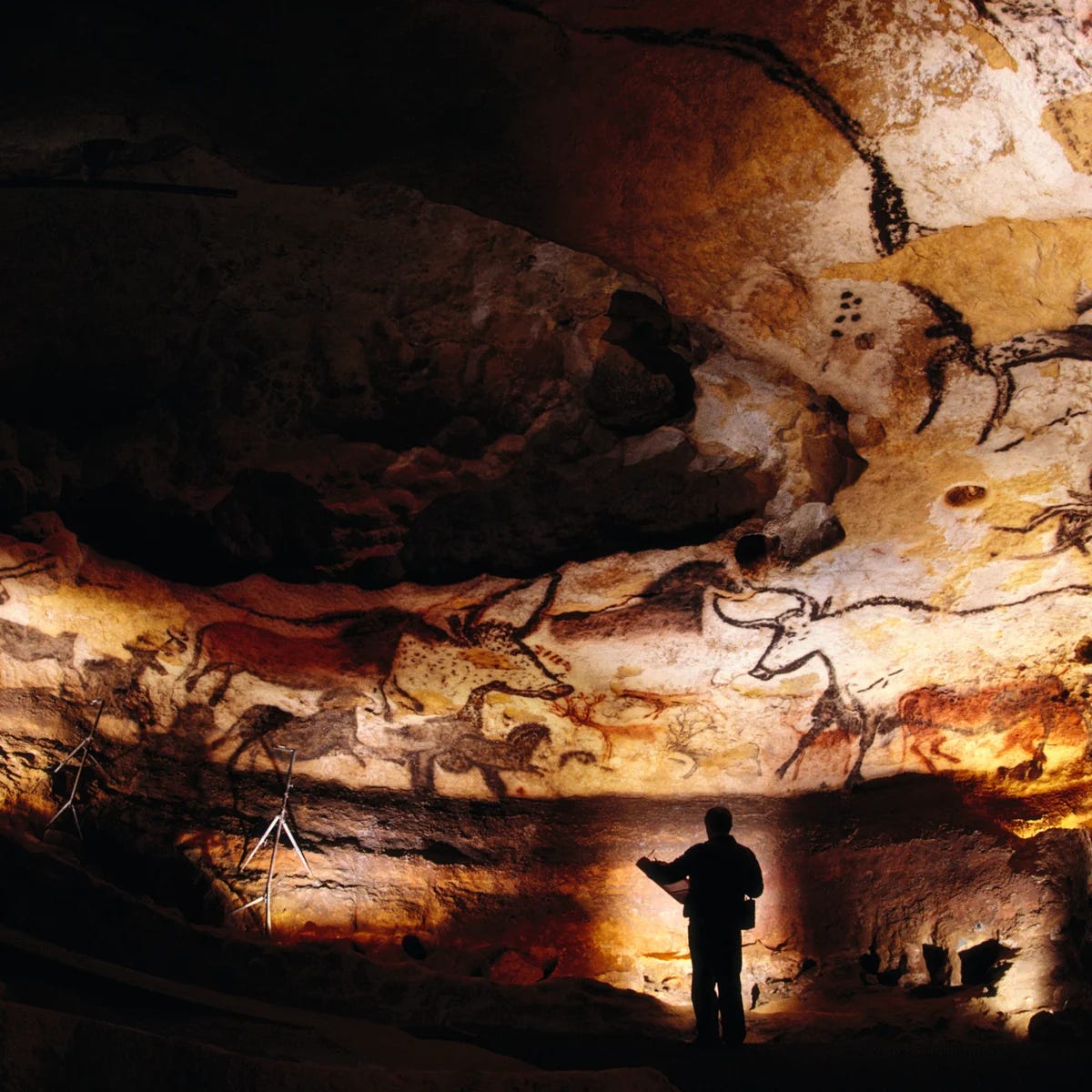
The Religion of Screens
The sacred is humanity’s source of meaning and order in the cosmos. And ritual is the structure by which we access the sacred.
But the modern world ditched the sacred.
We traded meaningful spiritual practice for hollow rituals and profane idols.
This is why we are in a meaning crisis.
Here are 3 simple examples to illustrate my point:
Daily ritual:
For thousands of years, dawn and dusk were times for prayer and meditation, connecting with the sun—the creator of all life on earth. These days, most people miss sunrise and sunset altogether, being indoors or distracted. And when we do catch one, the first impulse is to snatch a photo for “the gram.”Weekly ritual:
The Sabbath was originally a day of rest where we would “feed the holy,” connect with family, and celebrate life. It was a time to make space for the sacred and take a break from work, commerce, and everything in the ordinary world. Now for many, Sunday is a day for watching sports, binging Netflix, and doom scrolling.Annual ritual:
Christmas was once a holy day (holiday) that marked the winter solstice. It celebrated the return of the light after the 3 darkest days of the year. But it got co-opted by corporations and turned into rampant consumerism. We replaced reverence for the cosmic rebirth of the sun god with Santa and Amazon Prime.
“Religion is action, not belief.” —Derek Sivers
Screens are our religion.
Phones are the supreme idols of our veneration.
We carry them always. Gaze into them every chance we get. Sleep with them at our bedside. Panic if we lose connection (the internet kind not the human kind).
Screens all day working. Screens all night gaming.
TVs on the hearth displaced the family fire.
Streaming displaced dreaming.
“When you watch a show from Netflix and you get addicted to it, you stay up late at night. We’re competing with sleep, on the margin.” He later added with a laugh, “And we’re winning!” —Reed Hastings, CEO of Netflix
All our rituals involve screens.
They’re the alters of The Machine.
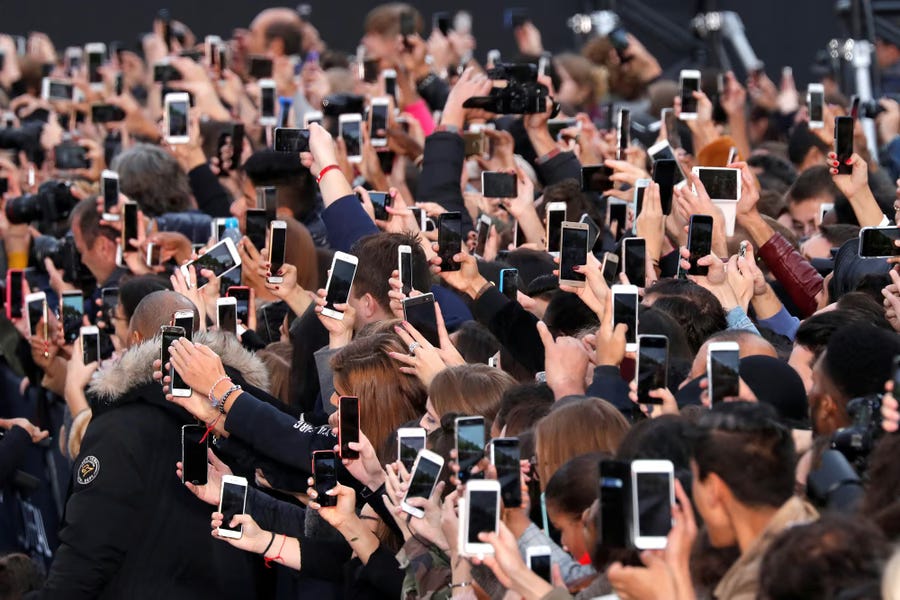
What is the Sabbath?
Sabbath comes from the Hebrew word Shabbat, which means “to cease” or “to rest.”
The etymology also implies “one in seven.” As in, one out of every seven days of the week (sabbath), or one in every seven years (sabbatical).
Traditionally, it’s a day of worship in Abrahamic religions, but you don’t have to be Jewish, Islamic, or Christian to take a Sabbath. You can make the weekly ritual your own and feed the holy in whatever way is true to you.
Secular or religious, rich or poor, black or white, cis or trans—we all need a fucking break from The Machine. So pick a day and protect it.
One day per week to rest your eyes from the onslaught of screens and turn your gaze upward (and inward).
24 hours to remember the sacred and reset.
1440 minutes to embrace eudaimonia.
Eudaimonia is a Greek word often translated as “human flourishing,” “well-being,” or “the good life.” Not to be confused with modern happiness, which is a fleeting emotion or a temporary feeling of pleasure.
Instead, eudaimonia is an ongoing state of living an excellent, meaningful, and purposeful life.
Greek Etymology & Translation
Eu: “good” or “well”
Daimon: “spirit,” “inner self,” or “divine spark”
Literal Translation: Living in harmony with your inner spirit or true potential.
What would it mean to live in harmony with your true self?
Are you ready to dedicate one day a week to that project?
More importantly, are you done getting Zucked?

Designing Your Digital Sabbath
In the US, Saturday & Sunday are already days off for most of us, and sacred to some. So I recommend using that cultural momentum and landing your Sabbath on the weekend.
But if you’re a religious orphan (like myself), a weekend shift worker (like my wife), or weekends just don’t flow for some other reason, no problem.
The point isn’t that one day is more special than the rest.
The point is that you need A DAY of rest.
It’s a lot easier if everyone else in your life is observing a sacred day along with you (like a church), but work with what you got. You don’t have to swallow a fish story to create a Sabbath practice.
Pull your friends and family into it. Make it something you look forward to, not another day you have to get through.
If you’ve already got a spiritual practice, weave it in as preferred.
But exit The Machine once a week and remember what it feels like to be a human being.
Here’s a tidy template you can use to get started, but make it your own. Each letter of the SABBATH acronym is one pillar of your reset ritual.
SABBATH
S – Stop the Screens
A – Abide in Rest
B – Bond with Others
B – Be in Your Body
A – Awaken Your Spirit
T – Tend to Your Craft
H – Help Someone in Need
S – Stop the Screens
One day off the grid. A full 24 hours. This is the line in the sand. A full day where the algorithms don’t get a vote.
No phone, no computer, no TV, no tablet, no notifications!
Devices in a drawer, box, or another room
Tell key people how to reach you only for true emergencies
If this sounds scary, you can put your mind at ease. In stopping screens, you get to create your new favorite day of the week.
One who is able to withdraw their senses from external distractions,
like a tortoise withdraws its limbs into its shell,
is to be considered firmly established in perfect wisdom.
—The Bhagavad Gita 2.58
A – Abide in Rest
This is not “catch up” day. It’s “come back to yourself.” It’s your day of rest.
Say no to more doing: errands and tasks that make it feel like a second job
Say yes to being: sleeping in, long breakfasts, books, naps, wandering
Let yourself exist without having to earn it
Abide instead of chase. Get off the hamster wheel. Be a Taoist for a day.
Embrace the yin.
Do you have the patience to wait
till your mud settles and the water is clear?
Can you remain unmoving
till the right action arises by itself?The master doesn’t seek fulfillment.
Not seeking, not expecting,
she is present, and can welcome all things.—The Tao te Ching, Chapter 15
B – Bond with Others
Use the Digital Sabbath to re‑center relationships as sacred, not peripheral.
Choose connection > content. Choose people > pixels.
Feast: Cook your best meal of the week & break bread together
(this alone is life-changing)Make eye contact & discover/remember the art of conversation
Spend time with your partner, kids, family, or chosen family
Bond around a fire, not down in the comments.
For where two or three are gathered in my name, there am I among them.
—The Gospel of Matthew, 18:20
B – Be in Your Body
Get out of your head and back into your body and the world.
Move: walk, stretch, dance, hike, and PLAY!
Fuck: is there a better day to practice sacred sexuality?
Nature: parks, water, trails, wilderness, stars (whatever you can get)
Your nervous system is calibrated for earth, not LEDs. Your body is an animal, not an avatar.
Would that you could meet the sun and the wind with more of your skin and less of your raiment,
For the breath of life is in the sunlight and the hand of life is in the wind...
And forget not that the earth delights to feel your bare feet and the winds long to play with your hair.
—The Prophet, On Clothes
A – Awaken Your Spirit
Sabbath is not just rest; it’s re‑orientation. Zoom out (or in) and see the bigger picture.
Spend time in solitude, meditate, or pray (float tank is perfect for this)
Read something that lifts your inner gaze (scripture, poetry, philosophy)
Watch the sunrise & sunset, stare at the night sky, & experience awe
Remember what’s sacred to you. Connect to the North Star that guides you.
Be still, and know that I am God. — Psalm 46:10
T – Tend to Your Craft
Create instead of consume. Work with total presence. It doesn’t matter what your craft is. If you don’t have a craft, this is the perfect day to cultivate one.
Draw, write, or play music singular focus and total attention
Tend the garden in your back yard with loving hands
Fix something, build something, or tinker for enjoyment (not as a chore)
Tend by giving care and attention to the craft or work that makes you feel most alive.
A day without work is a day without food. —Hyakujo, Zen Master
H – Help Someone in Need
Do something selfless. Not for status or recognition. For the act itself.
Do at least one thing purely for someone else in need
Help a homeless person, check on a friend, support a family or a neighbor
Small acts of generosity without a scoreboard
Help someone else to remember you’re part of a larger body.
The best way to find yourself is to lose yourself in the service of others.
—Mahatma Gandhi
Putting It All Together
You don’t have to hit every aspect of SABBATH perfectly every week. The power is in the direction your traveling, not in perfection.
It’s a liberating structure that unlocks a meaningful life, not a tyrannical dogma to make you a sinner and stress you out.
Nobody gets stoned to death if they break the Digital Sabbath!
(although you might get scrolled to death)
52 days per year without screens WILL CHANGE YOU.
By protecting one day in seven, your attention shifts from the profane to the sacred. You withdraw from The Machine and lift your gaze upward.
You align to your True North.
If you’ve read this far, you know what you need to do next:
Schedule your Digital Sabbath.
Seriously. Book it on your calendar.
Inform the important people in your life that you’ll be away from your phone that day. Let them know how to reach you in case of an emergency (a friend, neighbor, landline, etc).
Use the SABBATH checklist to prepare for an epic day:
Stop: When is your 24‑hour no‑screen window?
Abide: What makes the day feel unhurried?
Bond: Who do you want to be truly present with?
Be: Where will you explore nature and move your body?
Awaken: How will you meet the sacred?
Tend: What will you create or care for?
Help: Who will you serve?
The Digital Sabbath isn’t just about escaping screens. It’s about embracing eudaimonia.
You’re not just casting a Patronus to free yourself from face-sucking Dementors.
You’re also harmonizing inner spirit with outer action.
One day in seven to live your best life.
So what are you waiting for? Get out there and live it.
Happy Sabbath.
---
Christian
Las Vegas, NV
29/07/2026

100%