

Note: This post is part of the SoulQuest series.
“That’s why they call it the American Dream, because you have to be asleep to believe it.”
― George Carlin
Lost in the Desert
I grew up in a bit of a bubble.
For two decades I lived in a small town, as part of an insular community of fundamentalist mormons.
But after a crisis of faith, I left the fundamentalist fortress of my youth, and began swimming across the moat that surrounded my cult.
Being the explorer of the family, I had always thirsted for experiences “out there” beyond both my small town and my small world view. I wanted to travel the world, contemplate new ideas, and discover who I would become.
But more than anything, I was trying to process and cope with the fact that my entire worldview had just collapsed.
Leaving my faith and community, I had to effectively start over.
And I couldn’t have re-started in a more polar opposite environment than that of my childhood. At the ripe old age of 21, I moved to Las Vegas, and began chasing my American Dream.
In other worlds, I went out to get me some money, and as much of it as possible.
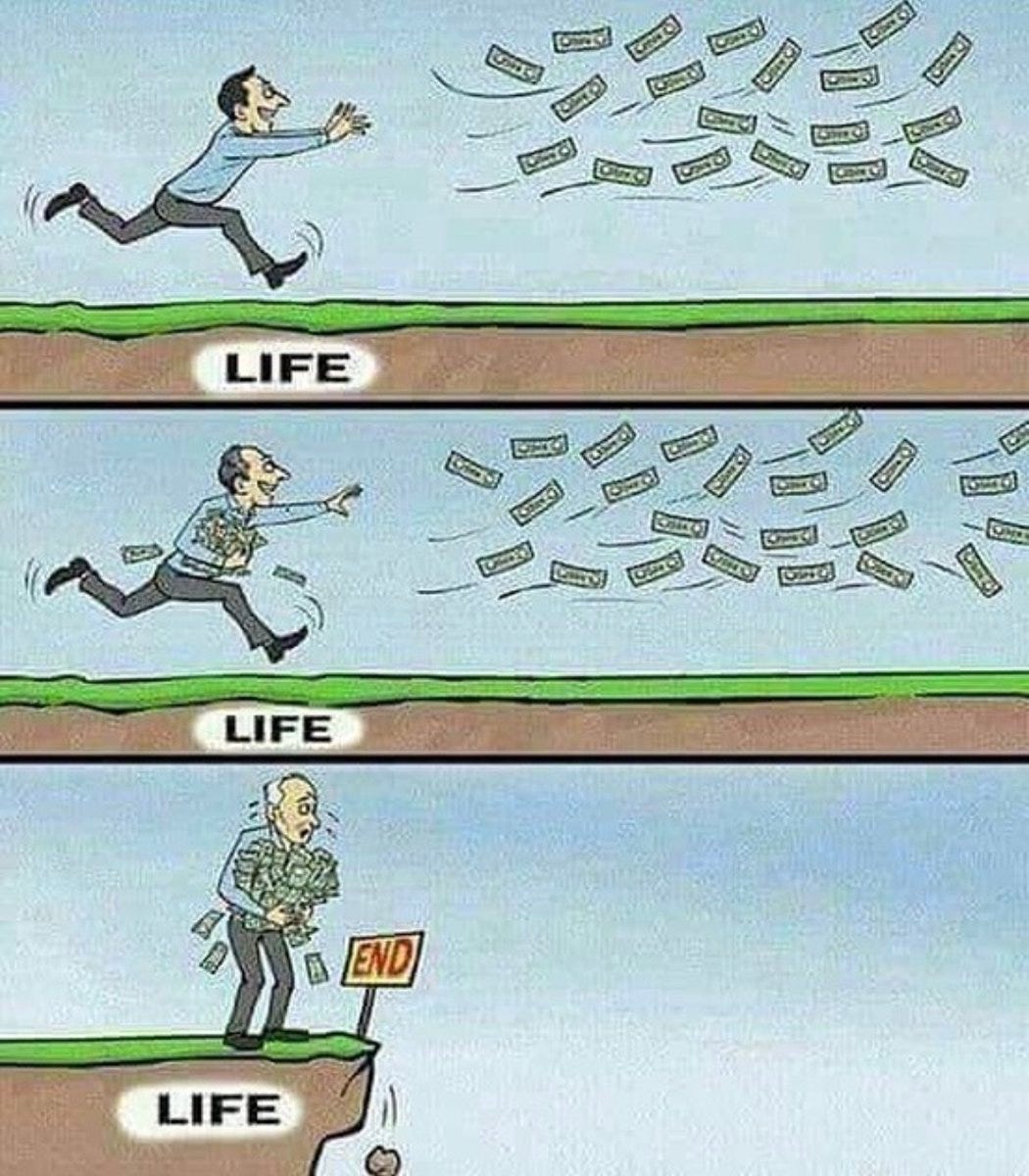
I moved into an apartment with a good friend, took a job at a mortgage company and went to work climbing up the ranks of the company. By my 22nd birthday, I was running my own small team as a loan officer, and started making more money than I had ever had in my life (by a wide margin).
It was good times. We worked hard, but played even harder.
Weekdays involved stress and chaos at the office, as we all scrambled over each other towards bigger and bigger pay checks. It was competitive, with company politics often leading to drama and ego contests.
It was totally normal for some strung-out hungover wreck to smash a phone on a desk, yell at nobody in particular, and slam the door on their way out.
These outbursts were unconscious laments against the machine we were caught up in. Deep down, we all knew that the work we were doing really didn’t matter all that much. Beyond the paycheck, it was all an abstract and meaningless use of time and energy.
My goal as a loan officer was to take as many calls as possible, convert them into closed loans as efficiently as possible, and make as much money as possible. A pretty standard script for most jobs in America.
But this meant there was no space for any real human connection with the people on the other end of the phone. They were just a loan number on a spreadsheet, and I wanted to minimize my contact with them as much as possible, which was the only way to close a high volume of loans.
It also meant that I was fighting for leads with all the rest of the loan offers. I had to perform at a competitive level, or my calls would get throttled and I would end up at the bottom of the office pecking order.

But the struggle was worth it, as I was making the best money of my life.
Beyond my quest for riches, life was a haze of hedonism. Being in your early 20’s in Vegas is already bad enough. Now add the fact that I was surrounded by people who loved to party, and who had a bottomless party budget.
What emerged was a potent combination that my liver was not prepared for.
Every weekend was a mini-bender.
Friday night to Sunday night were a blur of bars, golf courses, expensive dinners, night clubs, day clubs, and house parties.
The common denominator between them all? Copious amounts of alcohol.
Sometimes the weekend would spill over, getting away from us and bleeding into an extended bender. Once I spent 11 days straight more or less living on the strip as an intoxicated zombie.

But alas, the good times couldn’t last forever.
By the time I was 25, my closet full of expensive clothes didn’t seem all that important. The fancy dinners didn’t slap like they used to. And the strip had transformed from glitz and glam, to the worst kind of spam.
Most of all, the idea of chasing dollars until retirement felt like a life sentence.
I realized that I was lost.
So, I stopped chasing, and began seeking.
An Ego-Centric Bubble
Even after leaving the fundamentalist bubble of my youth, I found myself stuck inside another, much bigger bubble—the American Dream.
Of course, there are a lot of beautiful things to say about the American experiment. The bill of rights was a great leap forward for humanity. The inherent value of the individual was captured in Jefferson’s famous declaration:
“We hold these truths to be self-evident, that all men are created equal, that they are endowed by their Creator with certain unalienable Rights, that among these are Life, Liberty and the pursuit of Happiness.”
—The Declaration of Independence
But beneath that beautiful declaration, a dark shadow lurks in our collective psyche.
In the wake of that Great American Experiment, lies a trail of tears—the genocide and displacement of millions of indigenous peoples.
a terrifying war machine, and an ecological tragedy.
I realize the irony of exercising my freedom of speech as an American to critique the American Dream, but that’s sort of the whole point isn’t it? If we can’t stop and question our own culture, then we might as well be in an authoritarian state.
My favorite part of being an American, is having the freedom to think for myself, speak my truth, and act according to my conscience. And that inner voice has been sounding the alarm ever since 2018.
The alarm to wake up from the American Dream.
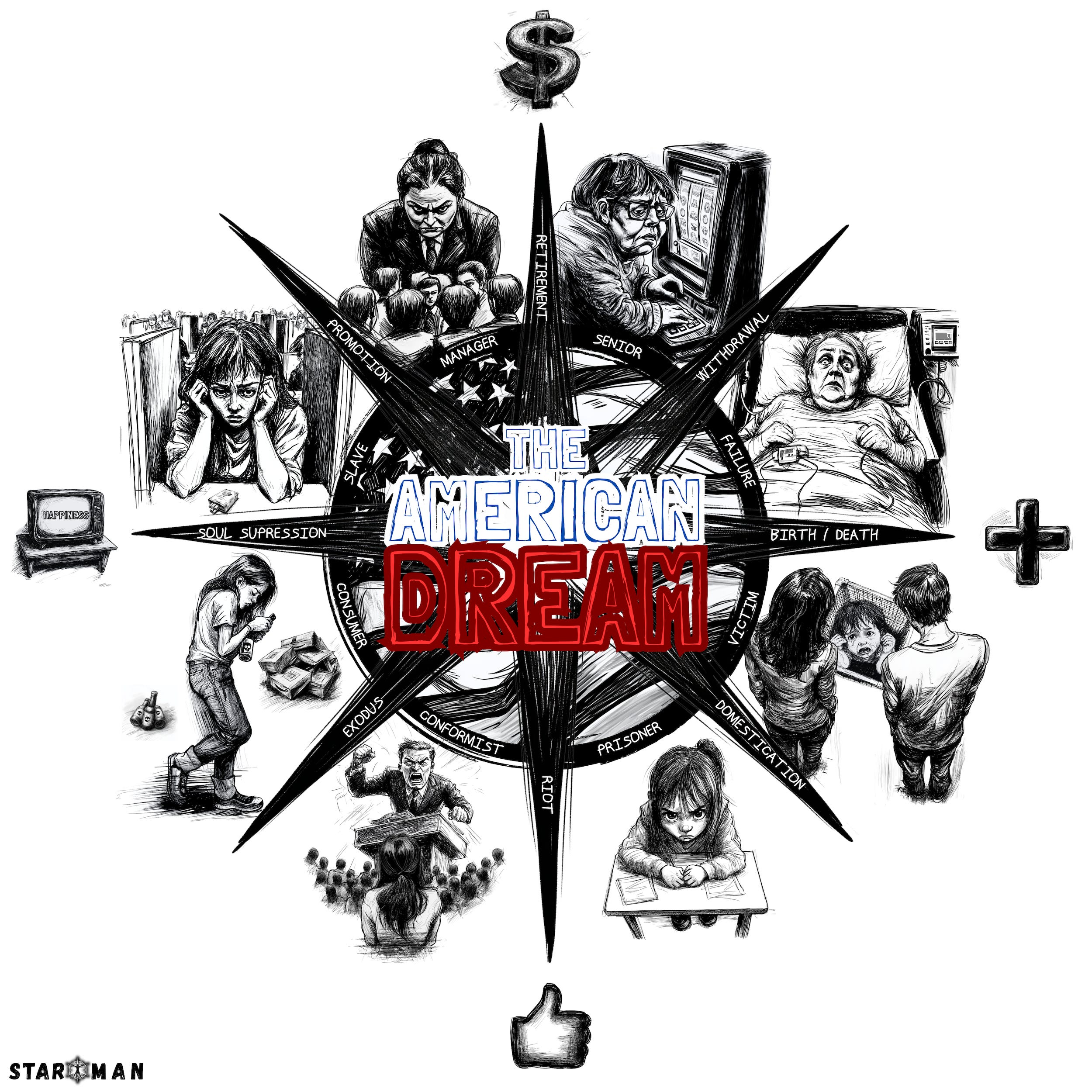
Bill Plotkin is an eco-depth psychologist who’s revolutionary body of work has made a profound impact on me. As a critic of our industrial-growth civilization, Plotkin invites us into personal transformation and cultural renaissance.
Plotkin has done a masterful job of articulating what many of us feel deep in our bones: that our culture is fundamentally flawed, and something is terribly wrong with the current American Dream.
Or as he would put it, American society is ego-centric.
“Ego-centric people are agents for themselves only (and perhaps also for their immediate families), without awareness of or tending of the social and natural environments that sustain their lives. Their consciousness is Ego-centered. A person with a healthy, mature Ego, in contrast, is ECO-centric; she understands herself as, first and foremost, an agent for (the health of) her ecosystem (and second, as an agent for the health of her human community, which dwells within that ecosystem; and third, as an agent for her immediate family and self). ― Bill Plotkin, Wild Mind: A Field Guide to the Human Psyche
In ego-centered societies, individuals primarily seek to maximize self interest.
Sound familiar?
Homo economicus (economic man) was the ideal that American economists Adam Smith and John Stewart Mill established as part of the capitalist blueprint. This version of humanity characterizes the American Dream quite well.
Homo economicus makes '“rational” choices to maximize self interest, utility, and profit.
Gotta get mine. Gotta take care of #1—me.
If you’ve ever played monopoly as a kid, you likely understood this idea early. Weather you hoard all the deeds and win, or get drained by higher and higher rents and lose, the game pulls back the curtain on the real objective of the American Dream:
Accumulate as much as possible.

But this ego-centric house is built on sand. This paradigm leaves out the simple (and obvious) fact that there is no “you” without the environment in which you live.
Organism and ecosystem go together. ☯️
By contrast, Eco-centered societies are conscious of their interconnectedness with nature, and make stewardship of the commons a top priority. They see everything as related, all from the same source.
“When we try to pick out anything by itself, we find it hitched to everything else in the universe.” —John Muir
Homo economicus sees himself as an individual rational actor, separate from the whole. But it’s literally impossible to not belong to the greater whole.
In other words, the self-made man does not exist. It’s an irrational concept, so actions taken from this perspective of separation are inherently irrational.
Its irrational to cut down an old growth forrest and turn it into dollars.
Its irrational to hunt species to extinction to turn them into dollars.
Its irrational to turn sacred waters into bottling plants and plastic dumps, all for more dollars.
We are not separate from nature. We are merely one species among millions of relatives. Every human is made of water from a planetary hydrological cycle, oxygen from a planetary atmosphere, and carbon from a planetary biosphere.
All brought to life by a star 90 million miles away.
It’s all one big interconnected dance.
“The cosmos is within us. We are made of star-stuff. We are a way for the universe to know itself.” —Carl Sagan
Once we fully grasp this, we can begin to play the infinite game. Not the win-lose game of homo economicus, but the win-win game of a new humanity.
But until then, we must pay the terrible price of the finite game, the game of homo economicus maximizing self-interest. And no, this price cannot be paid in dollars, but with our very souls.
We are in a poly-crisis.
Our egocentrism has lead to a tragedy of the commons in almost every domain.
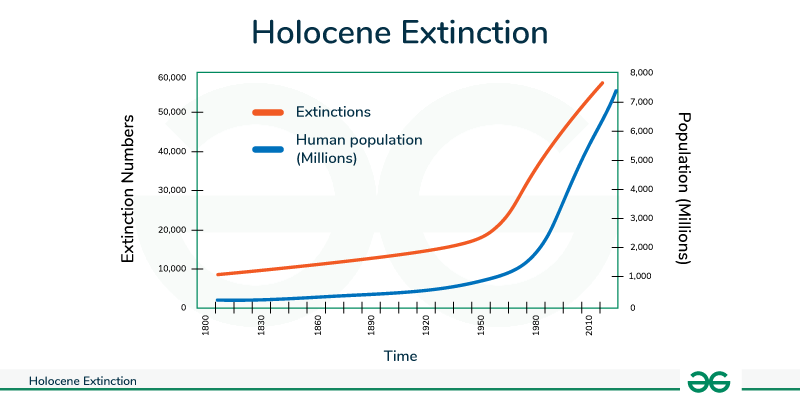
The biosphere is feeling the shockwaves of homo economicus. Our footprint is so deep, it’s leaving a mark in the fossil record and ushering in a new age: the Anthropocene.
Many scientists believe we are in the 6th mass extinction of the earth. It’s being called the Holocene or Anthropocene extinction.
Habitat destruction, over-exploitation of species, pollution, over-extraction of resources, and climate change are causing a great die-off. Extinction rates are hundreds to thousands of times greater than the background extinction rate of evolution.
Even if we want to harden our hearts and turn a blind eye to the environmental devastation (which is psychopathy), we still can’t ignore the damage to humanity itself, done by the American Dream.
Despite scientific advancements in medicine, the medical industry strives for profitable patients rather than healthy humans. Public health is worsening, as 3 in 4 American adults deal with at least one chronic disease, 2 in 5 Americans are obese, and 1 in 6 couples struggles with infertility.
The tech bros have captured our attention and extracted it for profit. On average, Americans spend 7 hours per day on screens, 9 hours per day for gen Z. But hey, at least a few pasty white billionaires get to win the game, and isn’t that what really matters?
Homo economicus has grown our economy massively, but most of that growth is only benefiting the people at the top. The wealth gap is massively widening, with the top 1% of Americans owning about 31% of America’s wealth.
But surely chasing all those dollars has got to be paying off right?
Well, more people now die from suicide than war and natural disasters combined.
Is that the payoff Adam Smith imagined?
Bill Plotkin characterizes our current poly-crisis moment as a failure of human development.
We mature biologically when we hit puberty, but growth beyond puberty is optional. Our psycho-spiritual development is stunted at the level of a teenager.
Rather than developing into true adults (eco-centric consciousness), our industrial growth society keeps us stuck in a kind of patho-adolescence. Through domestication, indoctrination, and education, we get trapped at the ego-centric level of development. Then, as “grown ups”, we turn around and do the same to the next generation.
That means most of our “elders” are actually still operating at an adolescent level of psycho-spiritual maturity. Sound familiar?

We are stuck in an ego-centric loop. Modern culture remains trapped in psycho-spiritual adolescence, resulting in widespread arrested development that fuels both personal suffering and ecological destruction.
“Arrested personal growth serves industrial “growth”. By suppressing the nature dimension of human development (through educational systems, social values, advertising, nature-eclipsing vocations and pastimes, city and suburb design, denatured medical and psychological practices, and other means), industrial growth society engenders an immature citizenry unable to imagine a life beyond consumerism and soul-suppressing jobs.” ― Bill Plotkin, Nature and the Human Soul: Cultivating Wholeness and Community in a Fragmented World
The American Dream has turned into a nightmare.
Waking Up from the American Dream
We are in the midst of Earth’s most radical transformation in human history.
Over the past two centuries, industrial civilization has been systematically destroying the planet’s major life systems.
Beyond the well documented ecological crisis, we face an AI arms race, economic destabilization, ethnic conflict, and the warfare of exponential technologies. Underlying these devastations are epidemic failures in human development. True adulthood has become rare in Western societies, and genuine elderhood nearly nonexistent.
We have drifted far from our intimate connection with nature and our own souls.
And yet, there is still hope. For it is possible to continue psycho-spiritual maturation at any age in life. Culture emerges from individuals, and individuals have the capacity to transform.
Deep down we all yearn for something more.
Something more than the boxed in life of cubicles and suburbs.
Something more than our scripted lives and flickering screens.
Something more than a cog in a great and terrible machine.
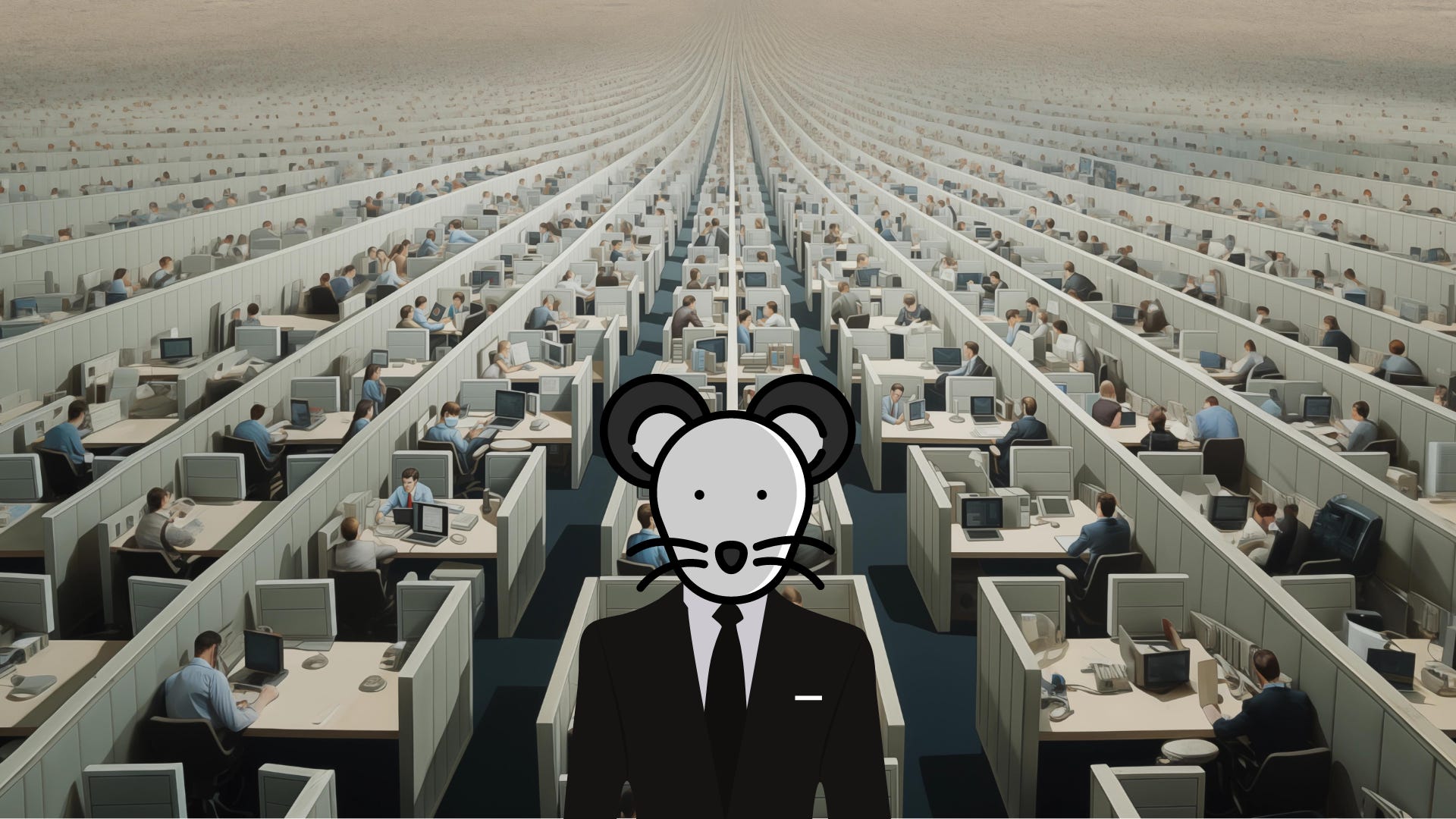
“As soon as enough people in contemporary societies progress beyond adolescence, the entire consumer-driven economy and egocentric lifestyle will implode. The adolescent society is actually quite unstable due to its incongruence with the primary patterns of living systems. The industrial growth society is simply incompatible with collective human maturity. No true adult wants to be a consumer, worker bee, or tycoon, or a soldier in an imperial war, and none would go through these motions if there were other options at hand. The enlivened soul and wild nature are deadly to industrial growth economies - and vice versa.” ― Bill Plotkin, Nature and the Human Soul: Cultivating Wholeness and Community in a Fragmented World
Plotkin is one of several earth elders calling us all to awaken from our egocentric nightmare, reclaim our imagination, and embark on the adventure of our lives.
We stand at the crossroads of history, and our generation will be pivotal in shaping the next age of the Earth.
“What lies before us is the opportunity and imperative for a thorough cultural transformation — what eco-philosopher Joanna Macy calls the Great Turning, the transition from an egocentric “Industrial Growth Society” to a soulcentric “Life-sustaining Society,” or what economist David Korten in The Great Turning calls the transition “from Empire to Earth Community.” The cultural historian Thomas Berry refers to this vital endeavor as the Great Work of our time. It is every person’s responsibility and privilege to contribute to this metamorphosis.”
― Bill Plotkin, Nature and the Human Soul: Cultivating Wholeness and Community in a Fragmented World
It time to wake up from the American Dream.
It’s time to evolve into eco-centric adults.
It’s time to become soul initiates.
As a youth, I was tamed and taught obedience. I was raised in the bubble of fundamentalism, and conformed to the norms of my community.
As I got older, I left one bubble for another. I exited the cult of Mormonism and plunged headfirst into the American Dream.
I got a job and filled my socio-economic role in society. To prove my worth to the world, I accumulated the symbols of success. I earned and drank and consumed my way into depression.
Then, after 25 years of domestication, education, indoctrination, and commodification, I woke up from the American Dream.
The pain of staying stuck in the script was now greater than my fear of what lie beyond, and I was ready to evolve.
So I quit my job and left my old life behind. I entered my cocoon and began wandering.
Little did I know that I was embarking on an odyssey of healing and self-discovery that would transform me entirely. I had walked through a one-way door and crossed a sacred threshold.
I had begun my SoulQuest.
Christian
Las Vegas, 18/02/2026
P.S. Stay tuned for the next chapter of the SoulQuest series.