

Once Upon a Time…
We used phones as tools to call loved ones, coordinate meetups, and share important information, but then we put them away and got back to living. We lived in communities, had real-world experiences, and enjoyed a pace of life that left our nervous systems with room to breathe.
Until one day, our phones grew glowing screens packed with endless novelty, becoming much more than just phones.
Then, motivated by power and profit, tech companies turned our phones slot machines, hijacking attention and pulling us down into the “scroll-hole.”
And so our sleep worsened, our focus diminished, and our nervous systems began to break. Families ate meals together in silence, each person lost in a labyrinth of screens. Intimacy became a product, connection a subscription, as we fell headlong into a mental-health crisis.
Until finally… we woke up and realized what we had lost. We realized that screens were consuming our lives and that it was up to us to take responsibility for our tech.
One by one, Seekers began the quest to own their phone, train their brain, and mind their time.

Our Nervous Systems are Breaking
We are living through a screen-induced mental health crisis.
Phones consume 5 hours and 16 minutes of attention per day on average. But when you tally our total screen time, Americans clock 7 hours per day—nearly 1/2 of our waking lives.
Sticky algorithms like TikTok, Instagram, and Youtube are powered by supercomputers and trained on our data. They manipulate our psychology to keep us engaged with cheap dopamine loops and hypernormal stimuli.
The Machine has taken over, and it’s breaking our nervous systems.
Attention spans plummet, focus fractures, and ADHD proliferates. Excessive social media use causes FOMO, anxiety, and depression. Meanwhile, night-time scrolling disrupts circadian rhythms, creating a downward spiral of poor sleep, chronic stress, and ultimately burnout.
Like zombies in a digital trance, we scroll through the infinite feed of The Machine.

Embracing Digital Minimalism
In his book Digital Minimalism: Choosing a Focused Life in a Noisy World, Cal Newport offers a philosophy of technology that serves instead of enslaves.
If Digital Minimalism was a math equation:
DM = (Values x Tech) — (Doomscroll + Spam + FOMO)
In short, Digital Minimalism is about intentionally using technology in a way that strongly support your deepest values, then happily missing out on everything else.
Imagine using your smart phone like a digital minimalist.
The slot machine is gone, replaced by a simple yet powerful tool. Screen time cuts down to 2 hours per day or less, and you take your power back from The Machine.
Imagine repairing your nervous system.
With screens under control and circadian rhythms balanced, you sleep deeper, wake clearer, and focus longer. The stress is no longer chronic, and your recovery rituals turn “burned-out” into “bounced-back.”
Imagine living like time was sacred.
You start each day with intention instead of Instagram, spending your days on what matters most. Curiosity reawakens and you begin a journey of healing, self-discovery, and transformation.

That All Sounds Great, But…
“I use my phone for work. I can’t just go on a digital detox!”
—The Professional Junkie
Really? Do you really need to check your email 17 times per day? Is that 523 hours per year scrolling social media really just “growing your business?”
And to be clear, Digital Minimalism isn’t about renouncing technology and escaping to the woods (total respect for those who do 🫡). Instead, think of it more like a “digital declutter” than a full detox.
You keep using your phone, but it stops using you.
“I’ve deleted Instagram 5 times, and I’m still on it.”
—The Toxic Relationship
Deleting a problematic app is a nice sentiment, but it’s not enough.
What you need is a new philosophy of technology that’s aligned with your values. You need proven protocols that transform your phone from an attention-devouring slot machine back into an empowering tool. You need to install a “dumb phone” launcher that runs on Digital Minimalism.
And even still, it will be hard at first. That’s why you also need a community to keep you accountable and support you through the transition phase. Once you change your digital environment, it still takes about a month before you stop reaching for that dopamine drip.
“I don’t have the energy to do this. I’m barely keeping my head above water.”
—The Burnout
Burnout is real, and most of us are suffering from it at some level. So in order to transform behavior, you need more than just a digital makeover.
You need to reset your nervous system.
Floatation therapy is one of the best modalities for this. The float tank is the ultimate environment to escape The Machine and fully reboot your brain. In just 60 minutes, cortisol drops, muscles relax, and stress melts away. And after just a few weekly sessions, your nervous system resets and you start to feel like yourself again.

Break Out of The Machine
We live in crazy times, but people are adapting.
The emerging industry of digital detox retreats is estimated at $2 billion, and its expected to skyrocket over the next decade as more people reach their breaking point. An even larger $20 billion market for “dumb phones” and digital wellness apps is also rapidly expanding.
These trends show our culture correcting towards more intentional tech use. Humanity is beginning to scrutinize screen time and seek a more balanced relationship with technology.
I’ve experienced this shift first hand.
3 years ago, my average iPhone screen time was 5+ hours per day. Instagram, Youtube, and Email were the biggest time-suckers. But after reading Digital Minimalism by Cal Newport, I realized I had to take responsibility for my screen time and make a change. So I turned my smart phone into a “dumb phone” and began shifting my habits.
Now my screen time is consistently under 2 hours per day, and that’s primarily used for messaging, calls, and navigation. I don’t use any screens an hour before bed time or within the first hour after waking. My phone charges in the office overnight so there’s no temptation to doom-scroll in bed.
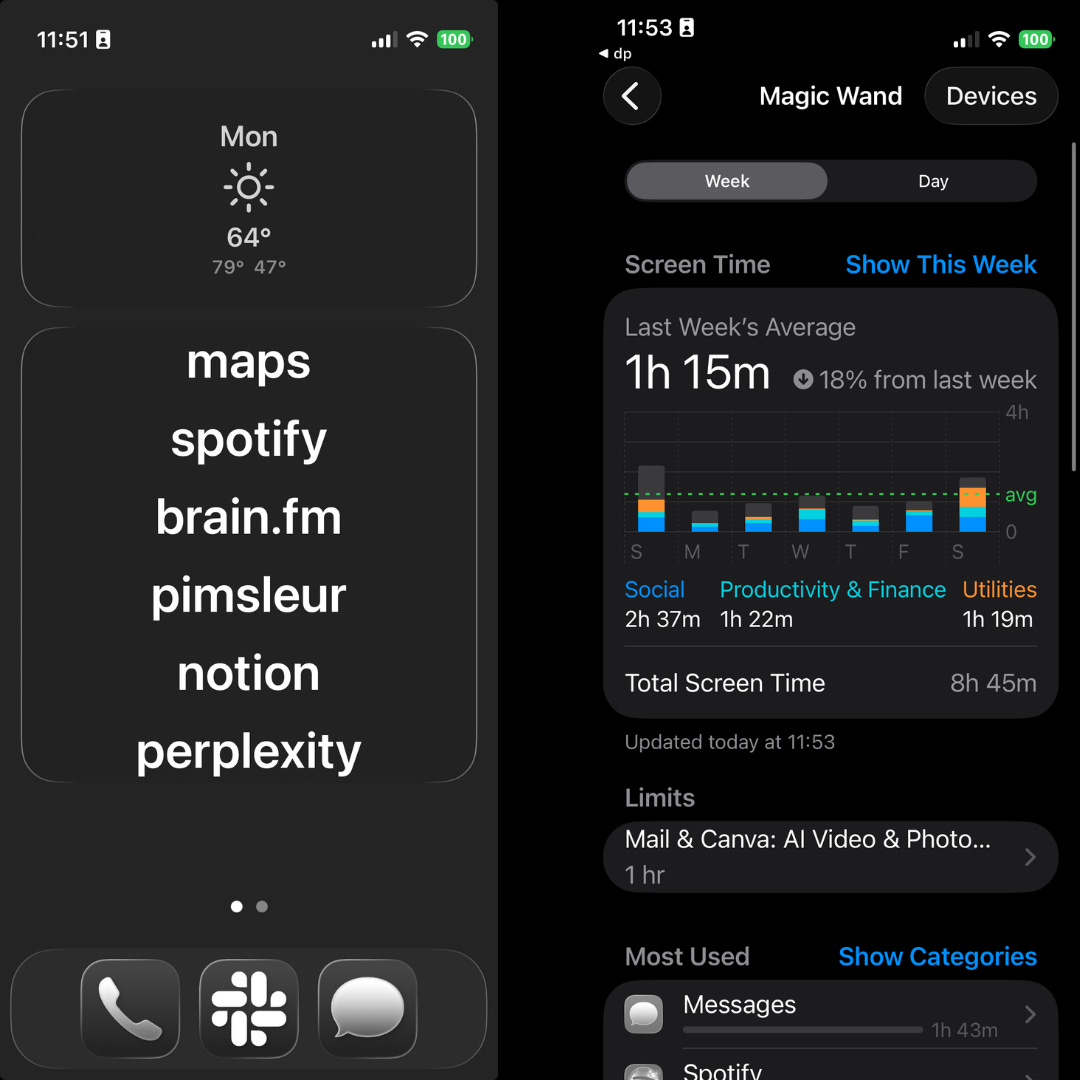
I sleep deeper, wake energized, and focus longer than ever before.
But you want to know the craziest part?
I reclaimed about 1000 hours per year from The Machine!
Since I’ve adopted Digital Minimalism 3 years ago, I’ve spent over 3000 extra hours reading books, writing blogs, learning Spanish, hiking, rock climbing, building my business, and spending quality time with my wife and tribe.
My only regret is that I wish I made the shift sooner.
What would you do with an extra 1000 hours per year?
Seeker, take your power back from screens.
Join the resistance.
Stay curious,
Christian,
18/05/2026
Las Vegas
